
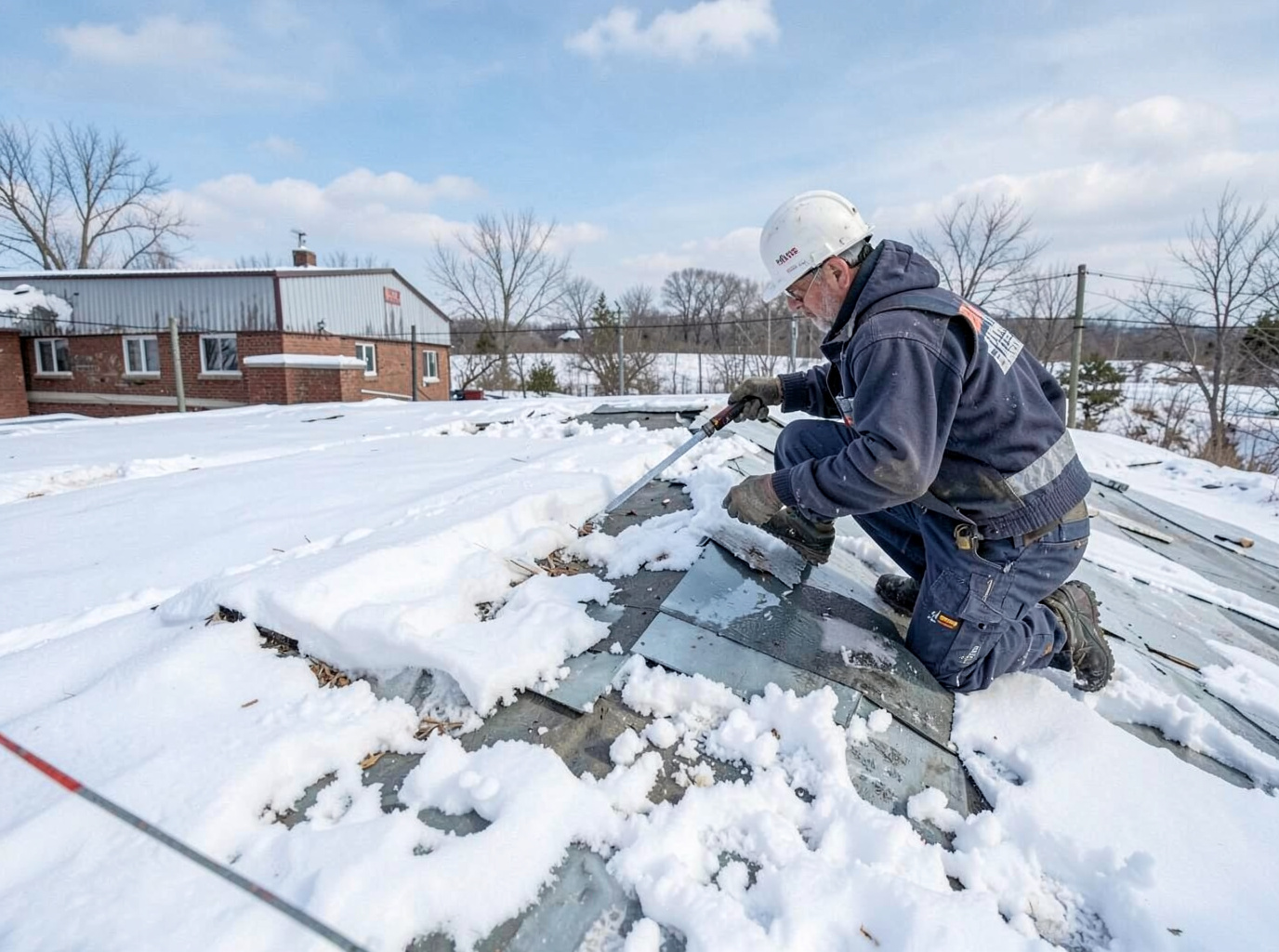
Billings roofs face repeated freeze-thaw cycles that drive water under shingles and flashings, especially on homes built before the 1990s in the Heights and South Side. Ice dams form along eaves when attic heat melts snow on the upper roof, then refreezes at the colder gutter line. Once water finds a path it can travel several feet under the underlayment, rotting sheathing and ceiling drywall before homeowners notice stains. Proper repair requires removing damaged courses, checking for hidden moisture with a moisture meter, and installing new ice-and-water shield at least six feet up from the eave or to a point two feet inside the exterior wall line per current Yellowstone County guidelines.
Asphalt shingles remain the dominant material on single-story ranch homes across North Park and Downtown Billings, yet their granular surface holds snow longer than metal roofs on newer West End construction. When ice dams are left in place, the weight can bend gutter brackets and crack fascia boards on older stock. Technicians working these jobs carry both granular and smooth-surface membrane because many 1970s homes still have 15-pound felt that has dried out and will not seal around new nails. Quick patching with caulk or roof cement rarely lasts through the next storm because the underlying felt has already lost flexibility.
Access on sloped lots near the Rimrocks often requires roof jacks and harnesses rather than simple ladders, and crews must stage materials so they do not slide onto neighboring properties. South-facing slopes warm faster and shed snow first, concentrating meltwater at valleys where two roof planes meet. Replacing valley metal or step flashing at these intersections prevents the most common callback in March. Homeowners who attempt their own ice removal with hammers or shovels frequently puncture shingles, turning a preventable leak into a full slope replacement.
Technician insight
In Billings the thing that catches most people out with Snow And Ice Roof Damage Repair is assuming the leak stops at the first ceiling stain. On 1960s–1980s homes in the Heights the ice often travels under dried-out felt two or three rafter bays before it shows up, so we always pull extra courses and check the attic even when the homeowner points to one spot.
Heights Ice-Dam Leak After Early March Warm Spell
Water appeared along the north bedroom ceiling of a 1974 ranch in the Heights. Inspection showed an ice dam had formed at the gutter line and driven water under the original 15-pound felt. We removed three courses of shingles, replaced the saturated sheathing section, and installed new ice-and-water shield extending four feet past the interior wall line. No further leaks occurred through the remaining winter.
Snow and Ice Roof Damage Repair Services We Offer
✓Ice Dam Removal and Prevention
Remove existing dams and install additional ice-and-water shield plus attic ventilation upgrades to stop recurring dams on Billings homes.
✓Shingle and Underlayment Replacement
Replace lifted or torn shingles and compromised felt with new ice-and-water membrane in leak-prone eave sections.
✓Flashing and Valley Repair
Re-seal or replace step flashing, chimney boots, and valley metal damaged by shifting ice loads common in Yellowstone County winters.
✓Sheathing and Fascia Restoration
Inspect and replace rotted plywood or oriented-strand board and damaged fascia boards after prolonged ice-dam leaks.
✓Gutter and Downspout Correction
Realign or replace sagging gutters and add heat cable where repeated ice buildup pulls brackets loose on older Heights properties.
Snow and Ice Roof Damage Repair Cost in Billings, MT
| Service | Typical Range | What Affects It |
|---|---|---|
| Ice dam removal only | $250–$450 | Single-story homes with easy ladder access; higher on two-story or steep roofs near the Rimrocks. |
| Eave course replacement with membrane | $600–$1,100 | Includes new shingles, underlayment, and drip edge on 20–30 linear feet. |
| Valley or flashing repair | $350–$700 | Price rises when rotted sheathing must be replaced under the valley. |
| Sheathing and fascia restoration | $800–$1,600 | Varies by linear footage and whether interior ceiling drywall also needs repair. |
Ranges are typical for Billings, MT and confirmed with an exact written quote before any work starts.
How it works
- 1
Site Inspection
Technician climbs the roof from multiple access points to map ice-dam locations, check attic ventilation, and probe sheathing condition with a moisture meter.
- 2
Damage Documentation
Photos and written notes record every affected course, valley, and flashing so the homeowner receives a clear scope before work begins.
- 3
Targeted Tear-Off
Remove only the damaged courses and underlayment, leaving sound shingles in place to limit exposure during the repair window.
- 4
Rebuild And Seal
Install new ice-and-water shield, replace shingles, and restore flashing with manufacturer-approved sealants rated for Billings temperature swings.
- 5
Final Walk-Through
Review the completed work from the ground and attic, confirm no active leaks, and provide maintenance guidance for the next freeze cycle.
Pricing
Upfront written quotes after on-site inspection; final price depends on roof pitch, stories, and extent of hidden sheathing damage.