
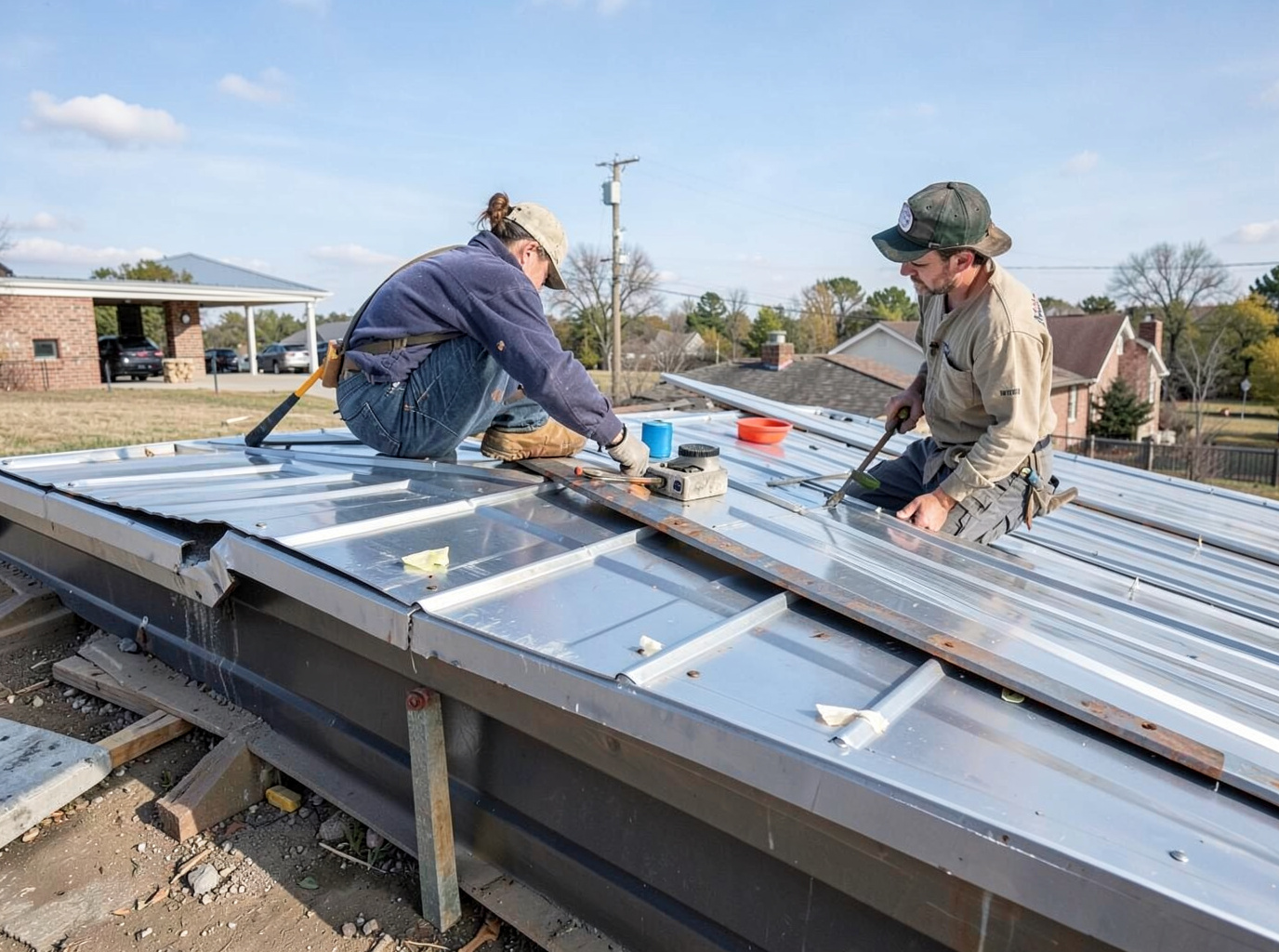
Metal roofing performs well in Billings once installers account for wide temperature swings between cold winters and warm summers. Panels expand and contract more than asphalt shingles, so crews use floating clips and leave proper endlap gaps on homes in the Heights and North Park. Near the Rimrocks, gusts require extra screws at eaves and ridges plus reinforced flashing at chimneys common on older stock. Underlayment choice matters because ice dams form quickly when snow melts then refreezes on south-facing slopes.
Many homes in the South Side and Downtown Billings date to the early 1900s with irregular rafter spacing and multiple layers of old roofing. Installers strip to the deck, sister damaged rafters, and add synthetic underlayment before panels go down. In the West End, newer construction often has steeper pitches that shed snow better but still need ridge vents to prevent moisture buildup during shoulder seasons. Proper valley flashing and step flashing around the many brick chimneys prevent leaks that show up only after the first hard freeze.
Gauge and coating selection changes the job on the ground. Twenty-nine gauge works on outbuildings but twenty-six gauge with a PVDF finish holds up better against Billings hail and UV. Crews run magnetic screw guns to avoid over-driving fasteners that create leak points later. On properties near the Yellowstone Art Museum or Moss Mansion, color choices often match historic guidelines while still meeting current wind-uplift standards for Yellowstone County.
Technician insight
In Billings the thing that catches most people out with Metal Roofing Installation is skipping the floating clips on standing seam. Once winter temperatures drop and panels tighten up, fixed screws pull out or dimple the metal on homes with long runs, especially those facing the Rimrocks wind.
South Side Retrofit
The 1920s home had three layers of roofing and sagging rafters. We stripped to the deck, sistered several rafters, added synthetic underlayment, and installed twenty-six gauge standing seam panels with snow guards. The roof now sheds snow cleanly and the attic stays drier through the cold season.
Metal Roofing Installation Services We Offer
✓Standing Seam Metal Roofing Installation
Hidden fastener systems that handle thermal movement during Billings freeze-thaw cycles and reduce leak points on homes in the Heights.
✓Screw-Down Metal Panel Installation
Exposed fastener panels installed with proper screw patterns for wind resistance near the Rimrocks and on South Side properties.
✓Metal Roof Retrofit Over Shingles
Direct-over installs that save time on West End and North Park homes while adding ventilation to prevent condensation in cold winters.
✓Snow Retention System Installation
Clamp-on snow guards sized for local snow loads that protect walkways and vehicles below roofs in Downtown Billings.
✓Custom Flashing and Trim Work
Fabricated valley, ridge, and chimney flashings matched to existing brick and stucco details common on older Yellowstone County homes.
✓Ridge Vent Integration for Metal Roofs
Continuous ridge ventilation added during panel installation to reduce attic moisture in warm summer months and ice dam risk in winter.
Metal Roofing Installation Cost in Billings, MT
| Service | Typical Range | What Affects It |
|---|---|---|
| Standing Seam Installation | $9–$14 per sq ft | Higher on steep pitches or homes near the Rimrocks requiring extra wind clips |
| Screw-Down Panel Installation | $6–$10 per sq ft | Lower cost on simple gable roofs in the West End |
| Retrofit Over Existing Shingles | $5–$8 per sq ft | Depends on number of existing layers and deck condition |
| Snow Retention System Add-On | $2–$4 per linear ft | Required on many South Side and Downtown roofs |
| Custom Flashing Fabrication | $150–$400 per feature | Chimneys and complex valleys common on older Heights homes |
Ranges are typical for Billings, MT and confirmed with an exact written quote before any work starts.
How it works
- 1
Site Assessment
Measure roof, check rafter spacing, and note wind exposure on properties near the Rimrocks or in the Heights.
- 2
Deck Preparation
Remove loose layers, repair damaged sheathing, and install synthetic underlayment rated for cold semi-arid conditions.
- 3
Panel Layout and Fastening
Set panels with correct endlaps and floating clips, then secure with screws placed for local wind loads.
- 4
Flashing and Trim Completion
Install custom valleys, ridges, and edge trim plus any snow guards before final walkthrough.
Pricing
Metal roofing costs vary with gauge, panel style, roof complexity, and access in different Billings neighborhoods.